Nardac
Nardac is the highest title of honor in the empire of Lilliput, a distinction that the Emperor of Lilliput conferred upon Lemuel Gulliver on the spot after he successfully seized the entire Blefuscu fleet. The title placed Gulliver at the apex of Lilliputian nobility, above even the most senior ministers, and it became both the symbol of his extraordinary service and a target for his enemies.
Origin and Conferral
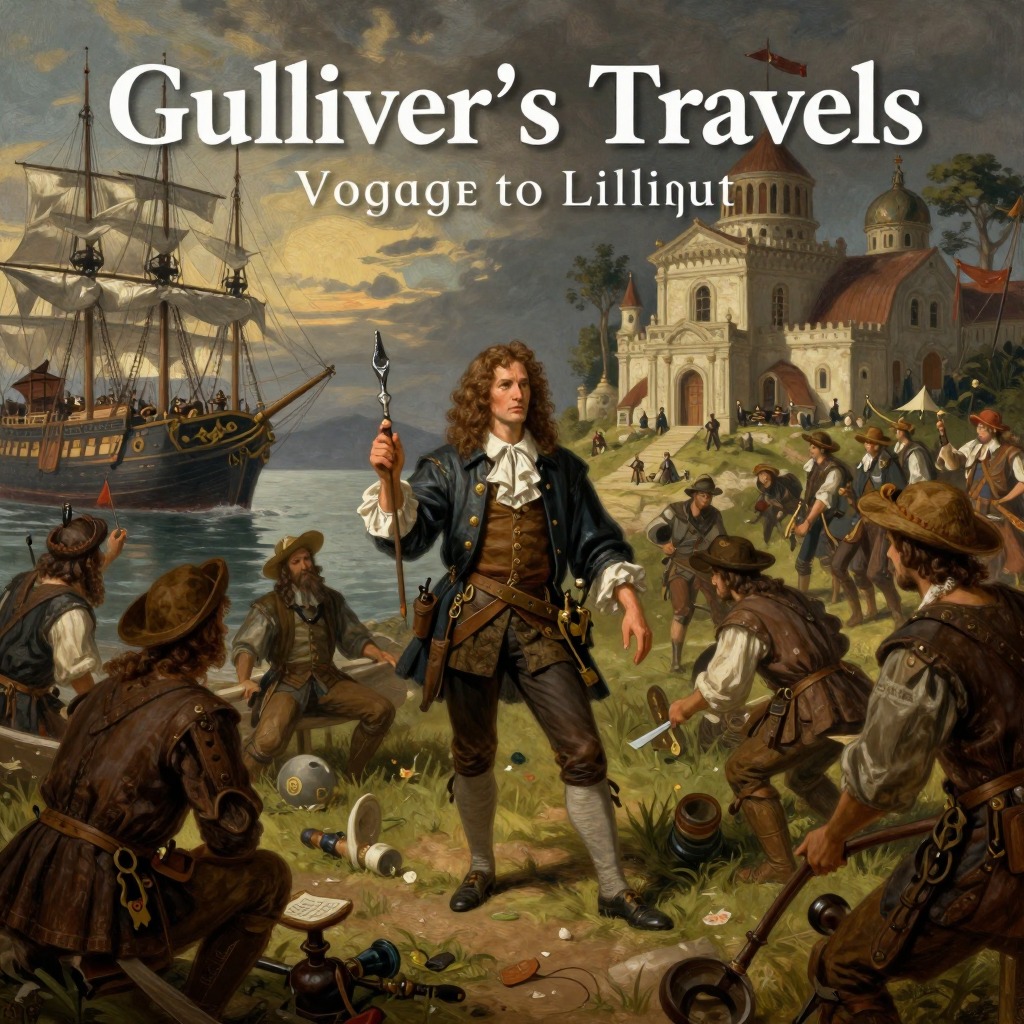
The title was granted immediately after Gulliver's greatest military exploit. Having waded into the channel between Lilliput and Blefuscu, he fastened hooks to fifty of the enemy's largest men-of-war and towed them to the royal port of Lilliput. The emperor and his whole court watched from the shore, and when Gulliver emerged from the water holding the cable, he cried out, "Long live the most puissant emperor of Lilliput!" The emperor received him "with all possible encomiums, and created me a nardac upon the spot, which is the highest title of honor among them." This was the moment of Gulliver's greatest triumph and the beginning of his undoing.
Status and Privileges
As a nardac, Gulliver occupied a rank so elevated that certain obligations previously imposed on him were considered beneath his dignity. When he had first been granted his liberty, the articles of release had included servile conditions such as carrying messengers and assisting workmen. But after becoming a nardac, "such offices were looked upon as below my dignity, and the emperor, to do him justice, never once mentioned them to me." The title also gave Gulliver considerable influence at court, which he used to do good offices for the Blefuscu ambassadors during their peace negotiations. He was able to intercede on their behalf, and they visited him in form, acknowledging "how much I had been their friend." The title thus carried real political weight, though it also made him a target of jealousy.
The Conspiracy and Revocation
The nardac title became a central issue in the conspiracy against Gulliver. When the emperor of Blefuscu, under pressure from Lilliput, sent an envoy demanding Gulliver's return, the envoy's instructions included the threat that if Gulliver did not return within two hours, "I should be deprived of my title of nardac and declared a traitor." The title was to be stripped from him as part of the formal punishment for high treason. The articles of impeachment drawn up by Skyrris Bolgolam, Flimnap, Limtoc, Lalcon, and Balmuff accused Gulliver of four capital crimes, including refusing to reduce Blefuscu to a province and aiding the enemy ambassadors. The proposed sentence ranged from death by poisoned arrows to the loss of his eyes, and the revocation of nardac was the first step in the legal process of his condemnation.
Thematic Significance
The nardac title encapsulates Swift's satire of courtly honor and political favor. It is a reward for a service that the emperor immediately wants to exploit further—demanding that Gulliver seize the rest of the Blefuscu fleet and reduce the empire to a province—but Gulliver refuses, protesting "that I would never be an instrument of bringing a free and brave people into slavery." This refusal turns the emperor against him, and the nardac title, which should have been a permanent mark of honor, becomes a conditional favor that can be revoked at the whim of a prince. Gulliver himself reflects on this when he considers resisting the conspiracy: he remembers "the oath I had made to the emperor, the favors I received from him, and the high title of nardac he conferred upon me," and these obligations restrain him from violent resistance. Yet the same court that gave him the title is now plotting to take it away and put out his eyes. The nardac thus represents the hollow and reversible nature of royal favor, a theme that runs throughout Gulliver's disillusionment with courts and ministers.